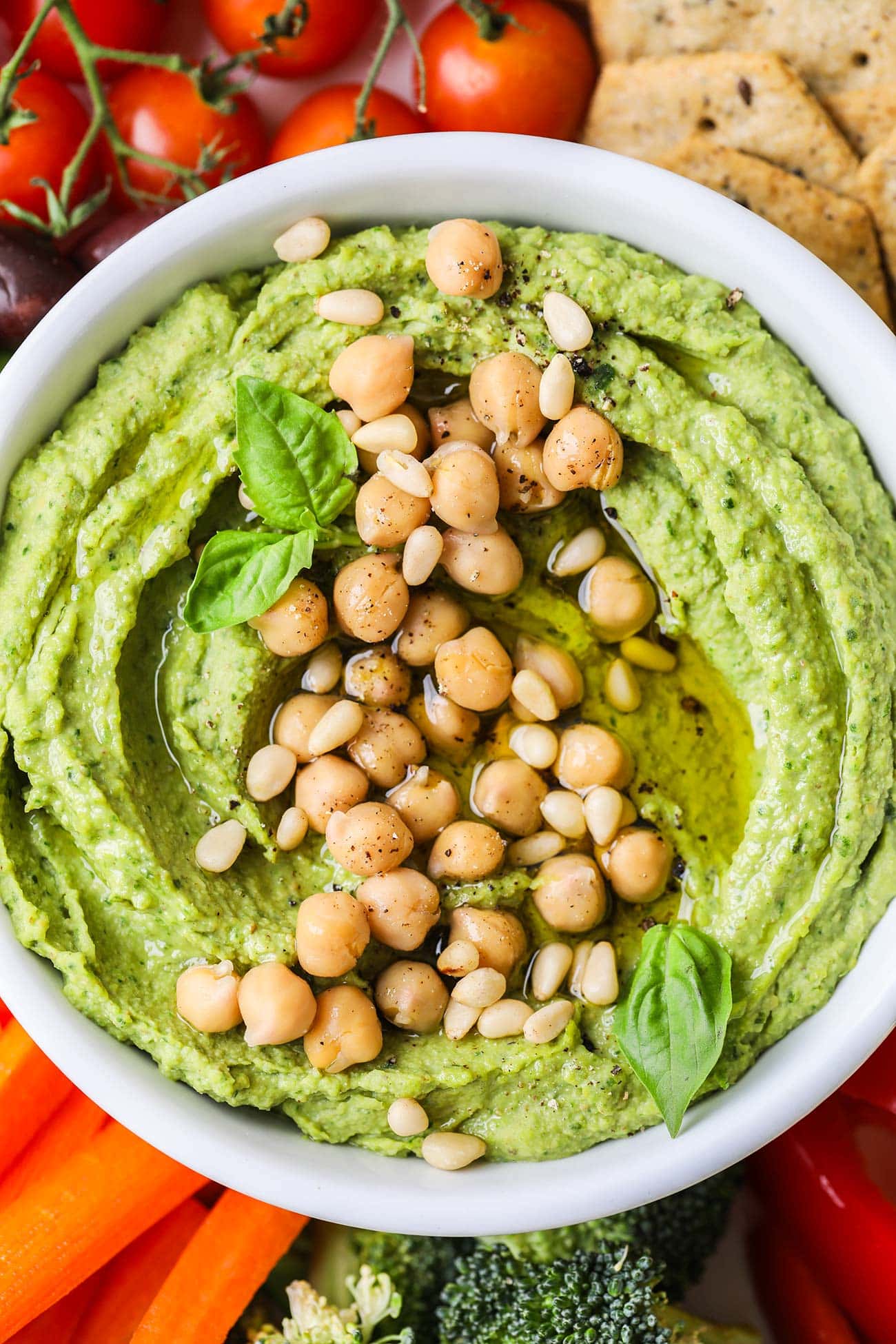
Liven up your dip – this Basil Pesto Hummus is packed with bright spring flavor! Start with a freshly made pesto, and blend it up with chickpeas or white beans, plus tahini, lemon juice and olive oil. Creamy, vibrant, and perfect for all your veggie-dipping needs!
Contents
Reimagine your Hummus with Vibrant Pesto
Homemade condiments instantly elevate meals. When you make them from scratch, the flavors are brighter, the textures are better, and everything simply tastes fresher.
Another bonus? You get complete control over the ingredients.
Many store-bought condiments are made with inexpensive seed oils and unnecessary additives, but when you make them at home you can choose high-quality ingredients that support both flavor and nutrition.
In this basil pesto hummus, that means using good olive oil (it’s wild that we have to worry about whether or not olive oil is “real”), fresh basil, and wholesome pantry staples to create a dip that’s vibrant, creamy, and full of herbaceous flavor.
This basil pesto hummus is the perfect example of how easy it can be to upgrade a classic. It combines the richness of traditional hummus with the bright, aromatic flavor of basil pesto for a spread that’s incredibly versatile.
Serve it with fresh vegetables, smear it onto sandwiches or wraps, or add a generous spoonful to grain bowls for an instant burst of flavor. Once you taste how fresh homemade hummus can be, it’s hard to go back to the store-bought kind.
What You’ll Need
Kitchen Tools:
Pesto Hummus
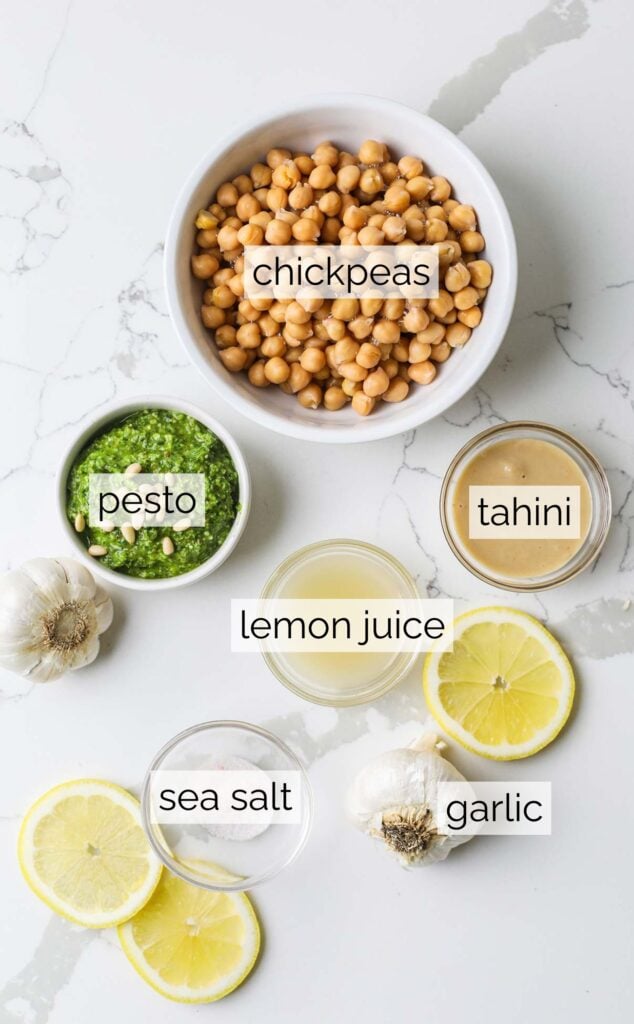
- Homemade Basil Pesto (or try this Arugula Pesto or your favorite jarred pesto)
- Chickpeas
- Tahini (sesame paste)
- Lemon Juice
- Extra Virgin Olive Oil
- Sea Salt
- Garlic
How to Make Homemade Basil Pesto Hummus
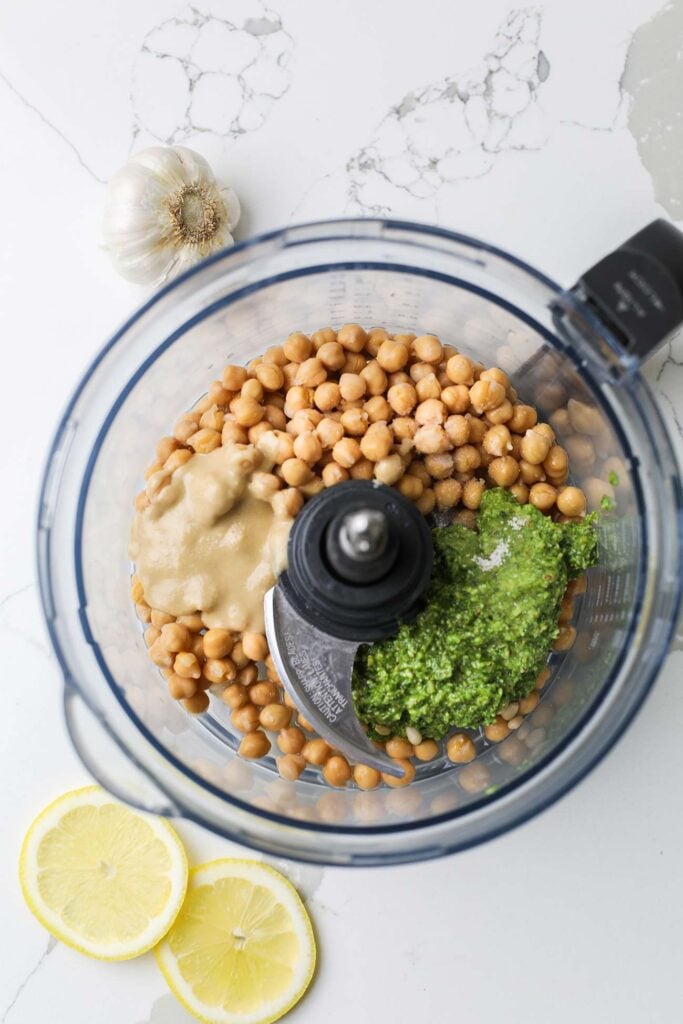
Step 1: Add the chickpeas, pesto, tahini, lemon juice, olive oil, and sea salt to the food processor, and process until very smooth and creamy. If the hummus is too thick and not a good creamy consistency, add 1-2 tablespoons more olive oil or water to thin it out.
Step 2: Grate in garlic (if needed, depending on how much garlic was in the pesto). Taste the hummus, and adjust seasonings to preference (more lemon juice, salt, or garlic, if needed).
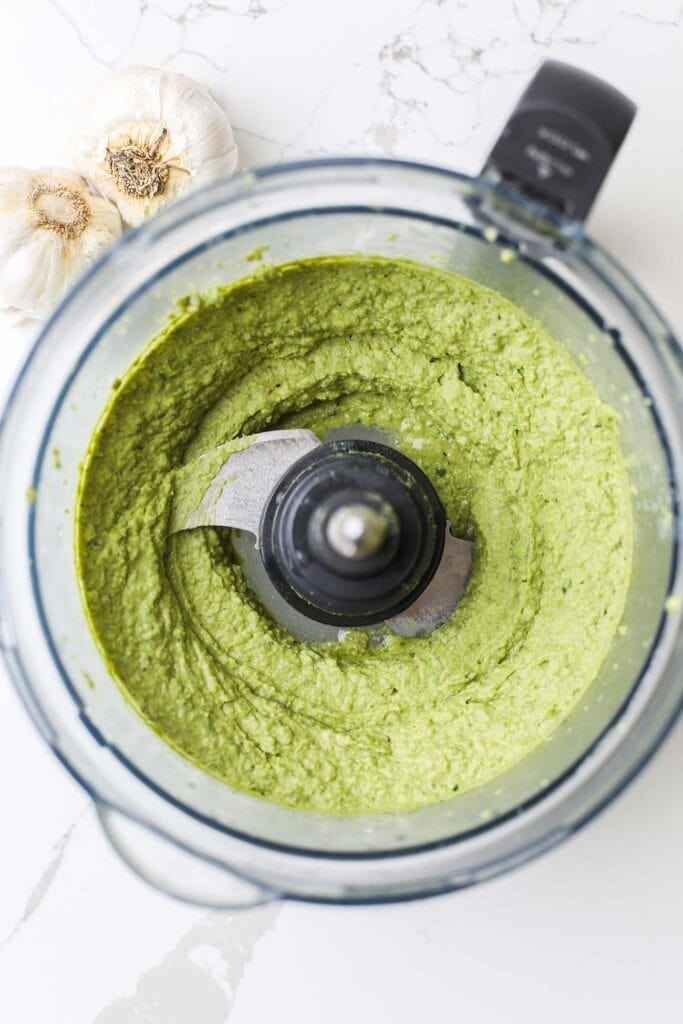
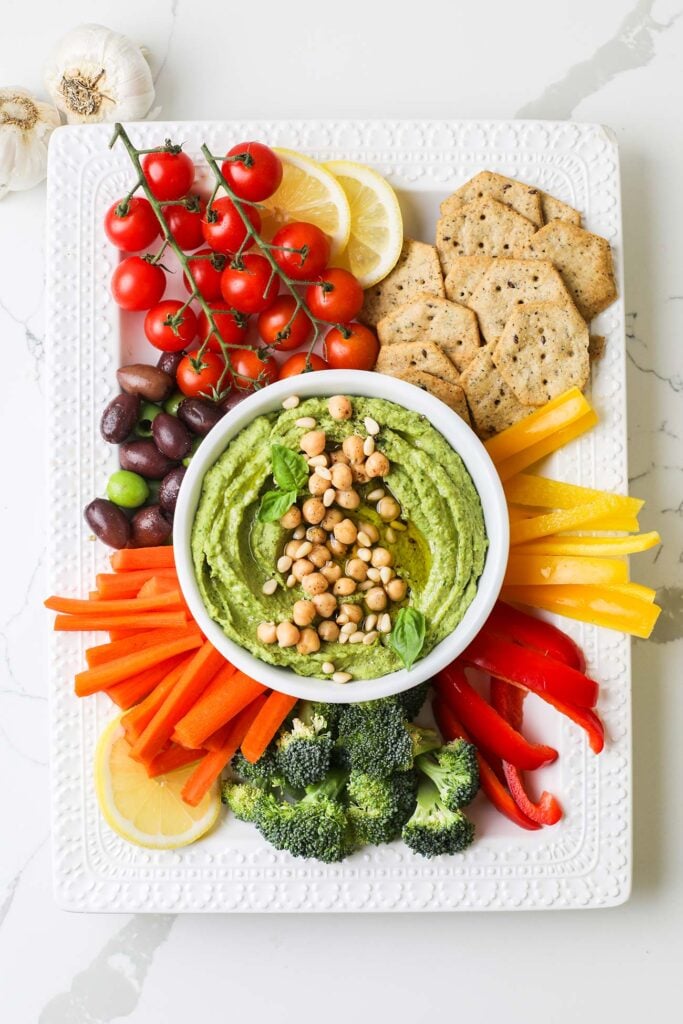
Step 3: Chill the hummus prior to serving. Serve with a variety of cut vegetables, crackers, pita, or more! See serving suggestions below.
How to Garnish Hummus: Smooth the top of the hummus out, leaving a swirl around the edges. Drizzle with olive oil, and garnish with pine nuts, chopped walnuts, additional fresh basil leaves, reserved chickpeas, or cracked black pepper.
How to Store Leftover Pesto Hummus
Store leftover hummus in an airtight container in the fridge for 5-7 days.
To Freeze: You can freeze hummus for 4-6 months. It is best stored in an airtight, freezer-safe container. Add a drizzle of olive oil on top to maintain moisture, and leave space for expansion. Thaw it slowly in the refrigerator and stir well, or re-blend it if necessary to restore its creamy texture.
How to Serve Hummus
Hummus is often served as an appetizer or snack along with pita bread, crackers, and cut up veggies.
Veggies to dip in Hummus:
- Carrots
- Celery
- Snap Peas
- Cucumbers
- Endive
- Bell Peppers
- Cauliflower
- Broccoli
Other Dippers:
- Pita Bread (or gluten free flatbread)
- Pita Chips
- Gluten Free Crackers (we love rice crackers or Simple Mills seed crackers)
- Pretzels
- Tortilla Chips (blue tortilla chips are a fun mix-up for a hummus platter!)
Also try hummus as a component of other meals!
- Bowl Topper: Add roasted veggies, grilled meats, and a dollop of basil pesto hummus into a bowl for extra flavor and nutrition!
- Salad Topper: Hummus makes an amazing salad dressing! Add a scoop of Basil Pesto Hummus to your favorite green salad along with a drizzle of vinegar.
- Sandwich Spread: This hummus adds a creamy layer of flavor to your favorite sandwich!
Tips for Beet Hummus
Make Pesto Hummus Vibrant Green: If your pesto isn’t fresh, it might not add the same vibrant green color to your hummus. If this is the case, add a few handfuls of fresh spinach into your food processor to add extra green color.
Start with Dry Beans: Instead of using a can of chickpeas, start with dried chickpeas. This gives the dish the best flavor if you have time! Soak dried beans in water overnight, then drain. Bring the chickpeas to a low boil in a pot of water, and simmer for 1-2 hours, until softened. This recipe needs 3/4 cup dried chickpeas.
What can be used instead of tahini? Tahini is a sesame paste used in a lot of Middle Eastern dishes. The flavor is unique and difficult to substitute. If you’re dying to try this but don’t have any, use additional olive oil (2 tablespoons) and consider using sesame seeds as a garnish. You can also omit it since the pesto adds so much flavor!
Save Time: Buy premade pesto to save time! Then this recipe is literally just dumping a few things into the food processor and giving it a good spin!
Vegan Basil Hummus: Use a vegan pesto recipe to keep this hummus dairy-free and vegan-friendly.
Other Hummus Recipes
- Basil Pesto Hummus (made with chickpeas or white beans!)
- Roasted Cauliflower Hummus (Made wither paleo (no beans) or with chickpeas!)
- Roasted Carrot Hummus (Bean-free, Whole30 Recipe)
I’d love to connect with you on social media! Find me on Facebook or Instagram where I post daily healthy eating and lifestyle inspiration!
Equipment
Ingredients
- 1 can chickpeas drained and rinsed (or use white beans)
- 1/2 cup walnut basil pesto or favorite jarred pesto
- 2 tablespoons tahini
- 1 1/2 tablespoons lemon juice
- 1/4-1/2 teaspoon sea salt to taste, depending on whether beans have salt
- clove garlic or to taste
- black pepper to taste (or to garnish)
Instructions
- Add the chickpeas, pesto, tahini, lemon juice, and sea salt to the food processor, and process until very smooth and creamy. If the hummus is too thick and not a good creamy consistency, add 1-2 tablespoons more olive oil or water to thin it out.
- Grate in garlic (if needed, depending on how much garlic was in the pesto). Taste the hummus, and adjust seasonings to preference (more lemon juice, salt, or garlic, if needed).
- Chill the hummus prior to serving. Serve with a variety of cut vegetables, crackers, pita, or more! See serving suggestions below.
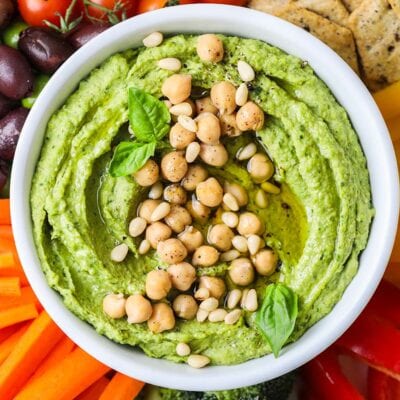
- How to Garnish Hummus: Smooth the top of the hummus out, leaving a swirl around the edges. Drizzle with olive oil, and garnish with pine nuts, chopped walnuts, additional fresh basil leaves, reserved chickpeas, or cracked black pepper.
Notes
How to Store Leftover Pesto Hummus
Store leftover hummus in an airtight container in the refrigerator for up to 7 days. To Freeze: You can freeze hummus for 4-6 months. It is best stored in an airtight, freezer-safe container. Add a drizzle of olive oil on top to maintain moisture, and leave space for expansion. Thaw it slowly in the refrigerator and stir well, or re-blend it if necessary to restore its creamy texture.How to Serve Hummus
Hummus is often served as an appetizer or snack along with pita bread, crackers, and cut up veggies. Veggies to dip in Hummus:- Carrots
- Celery
- Snap Peas
- Cucumbers
- Endive
- Bell Peppers
- Cauliflower
- Broccoli
- Pita Bread (or gluten free flatbread)
- Pita Chips
- Gluten Free Crackers (we love rice crackers or Simple Mills seed crackers)
- Pretzels
- Tortilla Chips (blue tortilla chips are a fun mix-up for a hummus platter!)
- Bowl Topper: Add roasted veggies, grilled meats, and a dollop of basil pesto hummus into a bowl for extra flavor and nutrition!
- Salad Topper: Hummus makes an amazing salad dressing! Add a scoop of Basil Pesto Hummus to your favorite green salad along with a drizzle of vinegar.
- Sandwich Spread: This hummus adds a creamy layer of flavor to your favorite sandwich!
The best summery flavor – and a great way to use up all my garden basil.