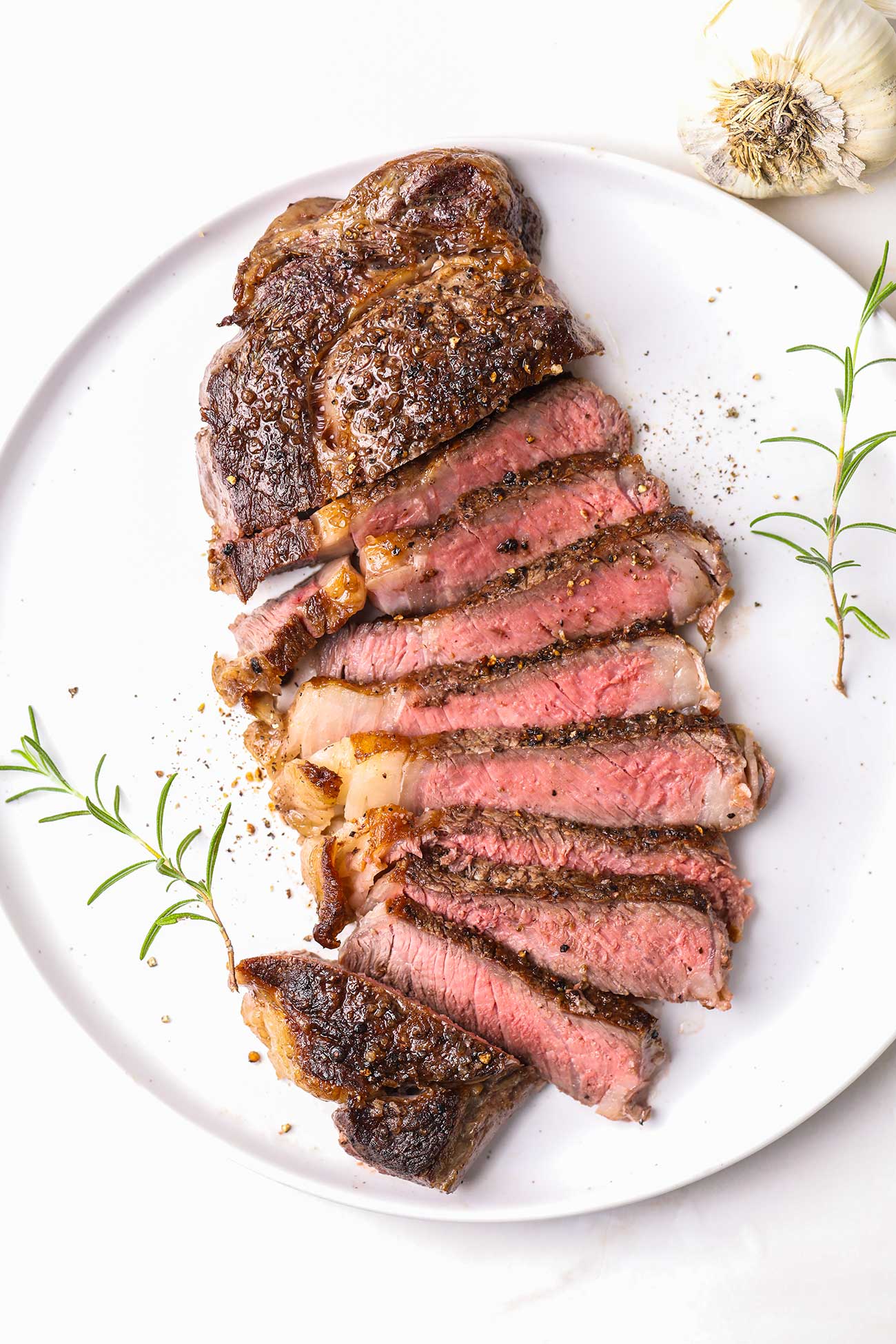
I love a good Ribeye Steak, but I have learned I enjoy them WAY more at home than in restaurants! Follow this simple guide and you will master cooking the perfect ribeye at home every time.
Contents
The Perfect Ribeye Steak, Every Time!
If you feel disappointed after ordering an expensive steak out, you’re not alone. The restaurant mark up means they often have to buy cheaper beef in order to make the price on the menu something people will pay.
Making it at home means you can choose prime beef, and have it cooked exactly to your liking, every time.
If you also love a good steak, but don’t love the restaurant price tag (or quality!), also check out the Best Way to Cook Filet Mignon, and this Creamy Black Peppercorn Sauce for Steak. (Both are recipes I have memorized and make all the time!)
I enjoy a medium-rare steak, but fear not! Making your steak at home means it will always been cooked exactly to your liking.
Follow this ribeye steak recipe, and you’ll save your hard earned cash, eat better quality beef, and never fear cooking an expensive steak at home again.
How to Pick a Ribeye Steak
Local, Pasture Raised Beef: Local, pasture raised beef is my first choice. I live in Oregon where we have an abundance of grass-fed and pasture raised cattle farms. My local Whole Foods sells the best steaks, and I don’t mind paying for them knowing how much we enjoy them (and that they are one of the most nutrient-dense foods we can buy!).
If you don’t have access to grass-fed or pasture raised beef, you can order them online! Try searching “grass-fed beef” to find an option that works for your budget.
Marbling: Many connoisseurs will recommend looking for generous marbling. The fat is what gives these steaks an extra tender texture and incredible flavor. I find all ribeyes to have great flavor, so I look for ones that have a more red, less marbled center. Choose the ones you enjoy the most!
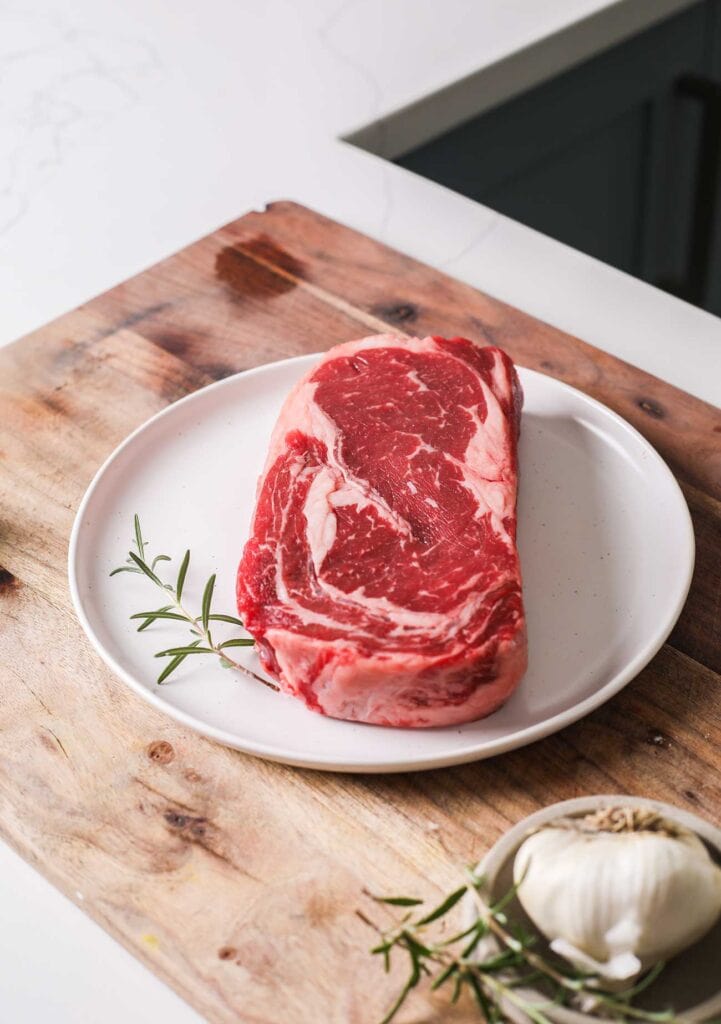
Thickness: A thicker steak is easier to cook because it’s more difficult to overcook. It also will retain more moisture and be a more juicy steak! Look for rib steaks cut to at least 1 inch.
Bone-In Steak or Boneless Ribeye?: This foolproof method for how to cook ribeye steak will work with either kind. This is also a personal preference.
Recommended Kitchen Tools
Cast Iron Skillet or Carbon Steel Pan: To build a really great crust on a steak, the pan needs to be hot – I mean SMOKING HOT! This works best with pans that are indestructible. A good cast iron pan works. I love my Carbon Steel Pans from Misen. These can transfer from the stovetop to the oven just the same as cast iron! I use my Misen Carbon Steel pans and my steaks come out perfect every time.
Meat Thermometer: I have a Meater digital thermometer and it works great. This is ideal if you roast meats and cook steaks often. It’s also great on the BBQ – since it connects wirelessly to your phone, you’ll now when you’re chicken is done without having to babysit the grill. For a more budget-conscious option, I also use this TempPro Digital Meat Thermometer.
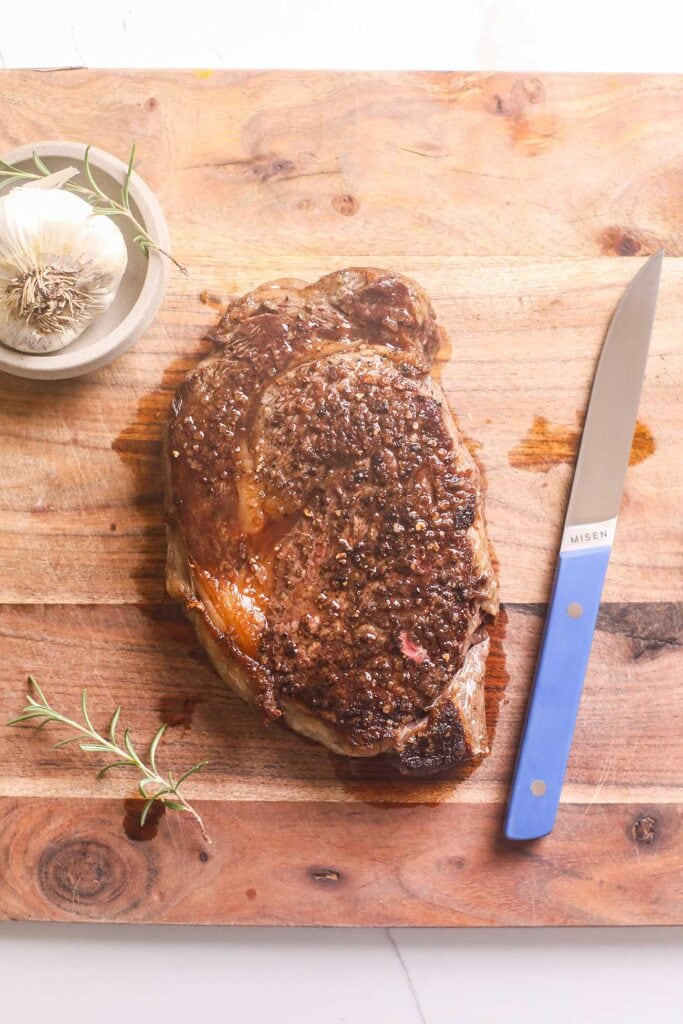
Straight-Edge Steak Knives: These steak knives are a game-changer! Instead of a serrated edge which tears the meat and allows juices to flow out, these cut through meat like butter, leaving the juices where they belong.
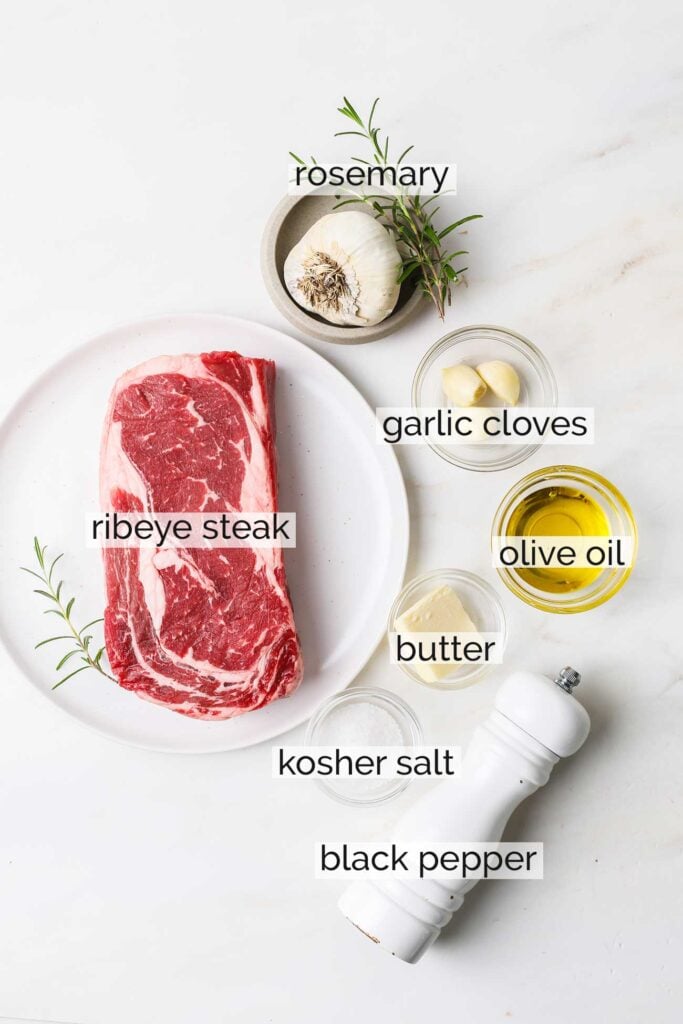
What You’ll Need
- The best quality Ribeye Steaks you have access to! I recommend buying local, grass-fed or pasture raised recommended! I definitely look for thicker cut steaks.
- Kosher Salt (do not use regular table salt for steaks!)
- Freshly Ground Black Pepper (lots of it!)
- Butter
- Olive Oil
- Rosemary Sprigs and Garlic Cloves (optional, but a great layer of flavor. Other fresh herbs like thyme or aromatics like shallots work great too.).
How to Cook a Ribeye Steak – Step by Step!
Step 1: Allow steaks to come to room temperature for about 30 minutes prior to beginning to cook them. Prior to beginning to cook steaks, preheat the oven to 400º F.
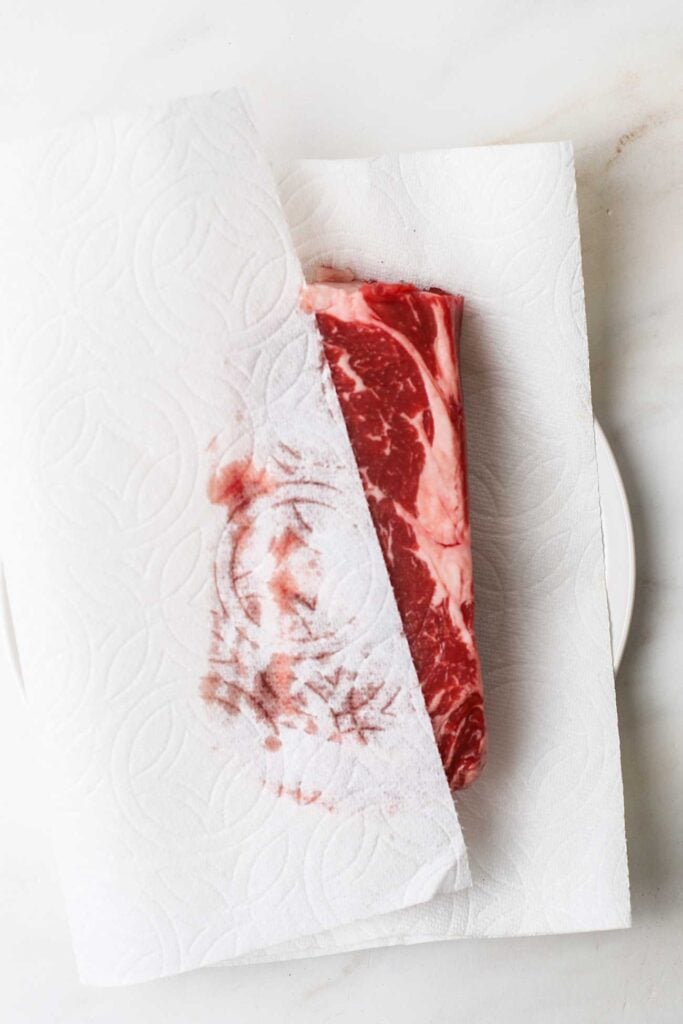
Step 2: Pat the steaks dry with paper towels.
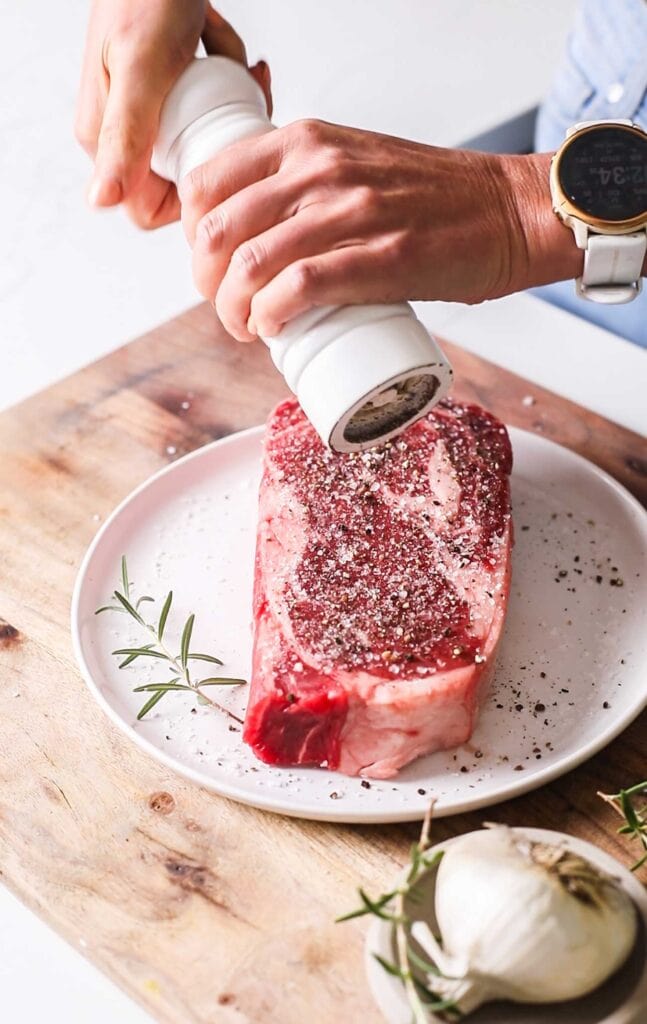
Step 3: Generously season the ribeye steaks on both sides with Kosher salt and black pepper. America’s Test Kitchen says you can never over-salt or pepper a steak – and since I started believing that, my steaks have come out so much better! The coating on the outside flavors the whole steak, and these are thick.
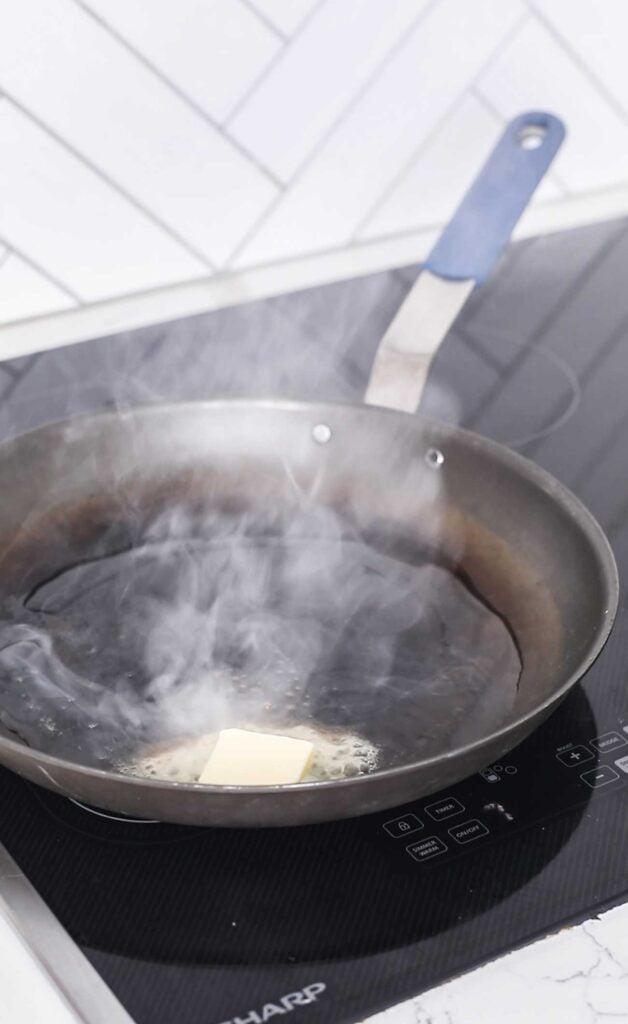
Step 4: Heat a skillet over medium-high heat. The pan should smoke when it’s hot enough. Add butter and olive or avocado oil. The oil prevents the butter from burning at a high temperature.
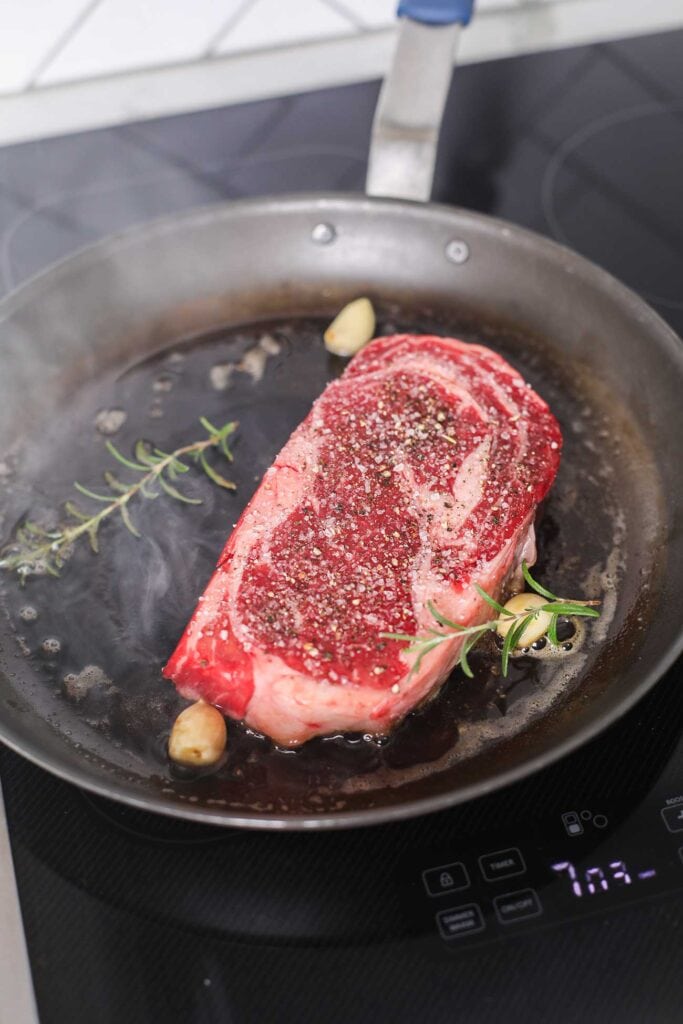
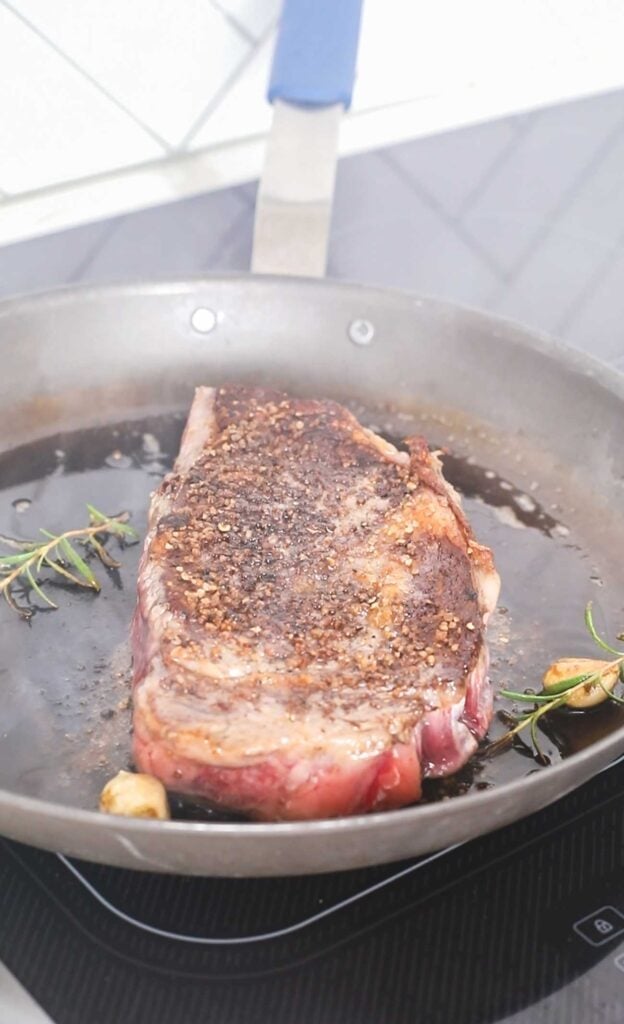
Step 5: Add the steaks to the hot pan, and cook them for 3 minutes per side for a good sear. Do not move the steaks or press them down during this time. Allow the meat to develop a flavorful crust by leaving it alone!
Step 6: Add garlic cloves and rosemary to the skillet, infusing the butter with flavor, and then spoon the butter mixture over the steaks to coat them in the flavor. This is referred to as butter basting the steaks. When this process is over, hold the steak with tongs and sear the fat caps for about 30 seconds on each edge of the steak.
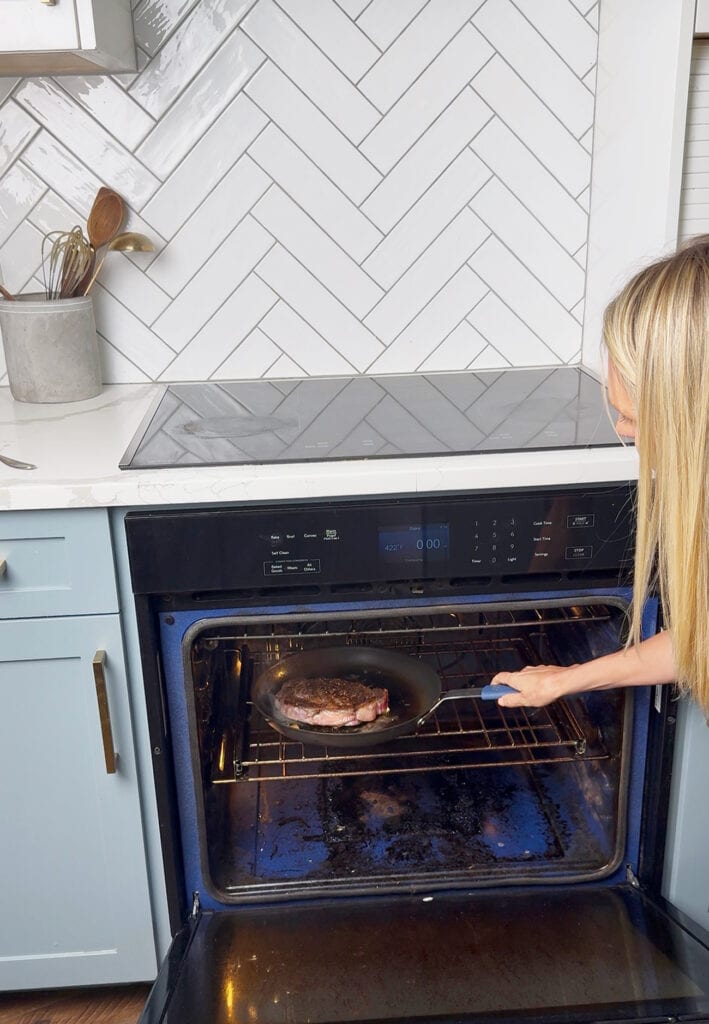
Step 7: Add the skillet to the preheated oven and bake the steaks to the desired temperature. Thicker steaks will take longer and thinner steaks should be checked prior to adding them to the oven. See chart below for cooking temperatures, and check steaks with a meat thermometer every 2-3 minutes.
Step 8: Once steaks have come to the desired temperature, remove them from the pan and allow them to rest on a plate for 10 minutes before serving. Some cooks will tent steaks in aluminum foil while it’s resting.
Internal Temperature for Beef
The first rule of the perfect steak is to not overcook it! Use an instant read thermometer and check the steaks often, especially if you prefer a rare or medium rare steak. Rare steaks take very little time in the oven. Cooking times are determined by the thickness of your meat.
A medium rare steak has an internal temperature of 130º F. Remove the steaks from the oven at 120º F. The heat from the exterior of the meat will continue to bring the internal temperature up while the steak rests.
Rare: remove at 115°F (about 3 to 4 minutes in oven). After resting, the internal temperature will be 120°F to 125°F.
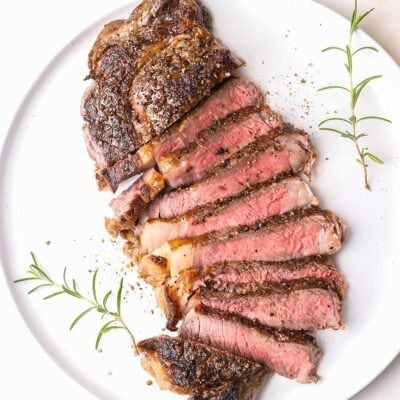
Medium rare: remove at 120°F (about 5 to 6 minutes in oven). After resting, the internal temperature will be 125 to 130°F.
Medium: remove at 130°F (about 6 to 7 minutes in oven). After resting, the internal temperature will be 135°F to 140°F.
Medium well: remove at 140°F (about 8 to 9 minutes in oven). After resting, the internal temperature will be 145°F to 150°F.
Well done: remove at 150°F (about 10 to 11 minutes in oven). After resting, the internal temperature will be 155°F to 160°F.
How to Serve Ribeye Steaks
A hearty steak dinner is something we enjoy, year round! In the summer, I keep things light with refreshing salads. And a good baked potato is always a good complement.
A quality ribeye steak, cooked simply, has so much flavor I don’t typically serve them with any kind of sauce.
Try:
- Air Fryer Baked Potatoes
- Oven Roasted Sweet Potato Wedges
- Spring Roasted Vegetables
- Delicata Squash
- Pear and Rocket Salad (Arugula Salad with Pomegranate and Pear)
- Chimichurri Sauce
Other Beef Recipes
- The Best Steak Caesar Salad (I recommend ribeye steaks for this recipe!)
- Healthy Beef and Broccoli Recipe
- Beef Tagine (Moroccan Beef Stew) (this is one of my VERY favorite recipes and one I make often.)
I’d love to connect with you on social media! Find me on Facebook or Instagram where I post daily healthy eating and lifestyle inspiration!
The Perfect Ribeye Steak
Equipment
- Cast Iron or Carbon Steel Pan I love my Misen Carbon Steel Pans – the same durability as cast iron, but lighter and sleeker!
Ingredients
- ribeye steak thick cut preferred
- Kosher salt generously season! Don't be afraid to overseason.
- freshly ground black pepper
- 1 tablespoon olive oil
- 1 tablespoon butter
- rosemary sprigs optional, thyme is also great
- garlic cloves optional, shallots are also great
Instructions
- Allow steaks to come to room temperature for about 30 minutes prior to beginning to cook them. Prior to beginning to cook steaks, preheat the oven to 400º F.
- Pat the steaks dry with paper towels.
- Generously season the ribeye steaks on both sides with Kosher salt and black pepper. America’s Test Kitchen says you can never over-salt or pepper a steak – and since I started believing that, my steaks have come out so much better! The coating on the outside flavors the whole steak, and these are thick.
- Heat a skillet over medium-high heat. The pan should smoke when it’s hot enough. Add butter and olive or avocado oil. The oil prevents the butter from burning at a high temperature.
- Add the steaks to the hot pan, and cook them for 3 minutes per side for a good sear. Do not move the steaks or press them down during this time. Allow the meat to develop a flavorful crust by leaving it alone!
- Add garlic cloves and rosemary to the skillet, infusing the butter with flavor, and then spoon the butter mixture over the steaks to coat them in the flavor. This is referred to as butter basting the steaks.
- Add the skillet to the preheated oven and bake the steaks to the desired temperature. Thicker steaks will take longer and thinner steaks should be checked prior to adding them to the oven. See chart below for cooking temperatures, and check steaks with a meat thermometer every 2-3 minutes.
- Once steaks have come to the desired temperature, remove them from the pan and allow them to rest on a plate for 10 minutes before serving.
Leave a Reply